Selected Writings
My first paid writing gig was as a summer reporter for the Pulitzer Prize-winning Pt. Reyes Light, a tiny weekly in West Marin County, California. Ever since then, I’ve worked mainly for long-form publications that give writers the chance to stretch out creatively and experiment with structure, character, and narrative. I thought I’d share a handful, including a fun April 2021 Jackpot excerpt that ran in the Atlantic, to give you a taste of my style. Just a sprinkling of things I’ve done over the years—although I didn’t include the one story for which I had to jump out of an airplane.
The Big Bad Republican Bill Wasn’t Regressive Enough for the Anti-Tax Crusaders
There’s a plan afoot to further reward America’s rich investors, with or without Congress.
July 2025, Mother Jones

It is apparently not enough for America’s anti-tax crusaders that Congress just passed one of the most expensive and regressive tax bills in our history. The Washington Post reports that Grover Norquist’s Americans for Tax Reform and other conservative groups are now urging the Trump administration to change how investment profits are taxed—unilaterally, if need be—in a way that would overwhelmingly favor the wealthiest Americans.
Sound familiar?
Namely, they want to index capital gains to inflation. Suppose I bought $100,000 worth of Apple stock on July 10, 2020, and kept it. Today, I could sell that stock for $170,383—a tidy $70,383 profit. That’s a 74 percent overall return and an average annual return of 11.7 percent. Pretty good, right?
Not good enough for Norquist et al. (Read more.)
Trump Does Not Have a Mandate for Any of This
He’s hardly the first president to claim he represents the people’s will—or God’s. But he might be the most brazen.
March 2025, Mother Jones

In the 1932 presidential election, Franklin Delano Roosevelt wiped the floor with his Republican rival, Herbert Hoover. He won the Electoral College 472-59, and bested the incumbent with 57 percent of the popular vote. It was a decisive rout at a time of crises—a devastating depression, soaring inequality, rising fascism in Europe—and FDR embraced it, launching his New Deal. “We do not distrust the future of essential democracy,” he declared in his inaugural address. “The people of the United States have not failed. In their need they have registered a mandate that they want direct, vigorous action.”
President Donald Trump, who is doing his best to undo what remains of FDR’s legacy, made similar claims in January—and in his address to Congress on Tuesday—of his own, narrow, victory, itself a response to crises ranging from real (inflation, war) to entirely fabricated (an immigrant crime wave, the Big Steal). “My recent election,” Trump remarked during his inaugural address, “is a mandate to completely and totally reverse a horrible betrayal and all of these many betrayals that have taken place and to give the people back their faith, their wealth, their democracy, and, indeed, their freedom.”
He was hardly the only one invoking the m-word. “Trump is back with a big agenda, a mandate—and an axe to grind,” noted a Politico headline.
Management and Budget officials justified their freeze on federal grants and loans based on “the will of the American people,” who had given Trump a “mandate to increase the impact of every federal taxpayer dollar.” Elon Musk, who has glommed onto Trump like a ravenous limpet, told White House reporters that “you couldn’t ask for a stronger mandate” to eviscerate the administrative state: “The people voted for major government reform, and that’s what people are going to get.”
Did they really? (Read more.)
“I Can’t Afford My Oxygen”: The Human Toll of For-Profit Insurance
A veteran physician explains how America’s health system leaves us poorer and sicker.
December 2024, Mother Jones

Amid the frenzied coverage of UnitedHealthcare CEO Brian Thompson‘s assassination and the public’s troubling reaction to it were references to various polls, including one conducted in 2016 by the Kaiser Family Foundation, whose results suggested that Americans were content with their private health plans.
Similar stats had crept into the debate over Medicare for All—a proposed national health insurance program to cover all Americans, and with which private insurers would have to compete. A few weeks before Thompson was murdered, AHIP, the primary trade group for commercial health insurers, published a new survey it had commissioned. About three-quarters of respondents, a “strong majority,” the group said, were satisfied with their employer-provided plans and preferred getting their coverage this way, as opposed to through any government program.
I found these numbers hard to square with the nonchalant—even celebratory—response to Thompson’s death. Until, that is, I spoke with Ed Weisbart. A veteran medical doctor, now retired, Weisbart serves as national board secretary for Physicians for a National Health Program (PNHP), a nonpartisan organization of some 25,000 doctors founded in 1987 to advocate for a public health insurance program. (Disclosure: My late mother was a member.)
So long as you’re healthy, he told me, it is in your insurer’s best interest to keep you happy by delivering on small claims. It’s only when it looks as though you’re going to cost them lots of money that the denials start coming—and maybe by then you’re too sick to fight. (Read more.)
Why Did Trump Win? It’s Simple, Actually.
When the economy thrives while half of America struggles, something has got to give.
November 2024, Mother Jones

In the coming days, you will hear every imaginable take on why Americans voted to put Donald Trump back in office.
Pundits will say toxic masculinity was to blame—and men feeling usurped by women. They’ll say it was the Christian nationalism movement. A surprising shift in Latino voting patterns. Sexism. Racism. Transphobia. Elon Musk. Crypto bros. “Theo bros.” Housing prices. Gaza! Propaganda from Fox News and Newsmax. Misinformation on X.
Perhaps it was the cowardice of powerful men like Jeff Bezos and Jamie Dimon. The anti-immigrant frenzy—Trump’s incessant false claims about vicious murderers and rapists and mental patients swarming across the border like locusts. Property crime. Inflation. Interest rates. Lingering malaise from the pandemic. The Democrats’ failure to sell their economic wins. Kamala Harris’ inability to distance herself from an unpopular president.
Or maybe a combination of all these things. Gender and Gaza clearly made a difference. Inflation is a notorious regime killer—it was high inflation that underpinned the rise of fascism in Europe in the last century—and rising wages haven’t kept pace. When the Dems say, “Look, inflation is back to normal,” well, the price of groceries sure ain’t.
But I’m talking here about something even more basic, something that undergirds so much of America’s discontent. The best explanation, after all, is often the simplest. (Read more.)
Refuge for the Robber Barons
Deranged stalkers? Bitter exes? Angry mobs? Tom Gaffney’s clients are ready.
January 2024, Mother Jones
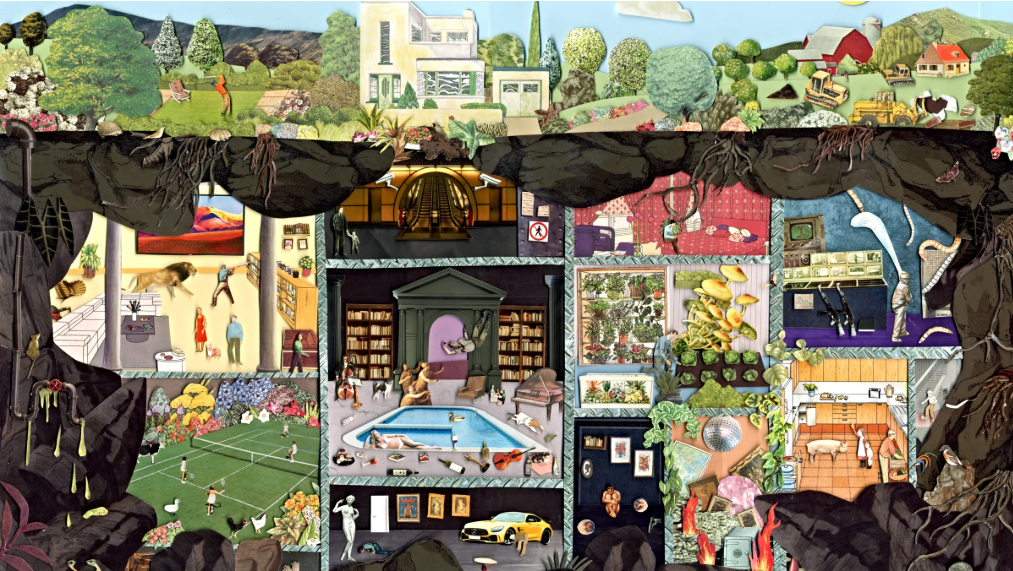
On an overcast Wednesday in July 2020, a ragtag collection of 100 or so demonstrators converged outside the Southampton, New York, mansion of billionaire media mogul and former NYC mayor Michael Bloomberg. The nation was reeling from Covid lockdowns and months of unrest over police violence. The state’s billionaires, though, were clocking massive gains—almost $47 billion collectively during the pandemic’s first two months alone.
The protesters, some of whom carried plastic pitchforks and referred to Bloomberg as a “looter,” according to the local daily, were demanding that billionaires pay more taxes—and rightly so. Berkeley economists Gabriel Zucman and Emmanuel Saez had recently calculated that the combined taxes paid by the nation’s 400 top earners amounted to 23 percent of their incomes, well below the national average of 28 percent. The crowd eventually moved down the road for a repeat performance at the estate of private equity billionaire Stephen Schwartzman, Blackrock’s CEO.
This rare breach, by the rabble, of a notable haven of the super-rich, served as a stark reminder of the perils that might await the Rolex-and-Balenciaga crowd should the natives get too restless. “We fielded a lot of calls from the Hamptons today,” 61-year-old Tom Gaffney, whose livelihood relies on upper-crust anxieties, told me the day after the Southampton mini-uprising.
Gaffney, a minor character in Jackpot, my recent book about wealth in America from which this article is adapted, is the go-to guy for plutocrats seeking a hedge against the unthinkable—a luxury space that can be transformed, with the push of a button, into a pampered fortress, a haven safe from armed invaders, deranged stalkers, would-be kidnappers, and resentful Occupy mobs. (Read more.)
Stop Asking Whether Money Buys Happiness
It may, but only a negligible amount.
April 2023, The Atlantic
For more than a half-century, researchers at UCLA have conducted a massive annual survey of incoming college students titled “The American Freshman: National Norms.” One part of the survey asks students to rank 20 life goals on a scale from “not important” to “essential.” Most are lofty aspirations such as becoming a community leader, contributing to scientific progress, creating artistic works, and launching a successful business. Surveyed in 1969, freshmen entering four-year colleges were most interested in “developing a meaningful philosophy of life” (85 percent considered it “essential” or “very important”); “raising a family” (73 percent); and “helping others who are in difficulty” (69 percent). Ten years later, freshmen opted for “being an authority in my field” (74 percent), followed by “helping others” and “raising a family.”
But something shifted amid the Reagan Revolution, which deregulated Wall Street, revamped the tax code, and set the nation hurtling toward levels of wealth and income inequality unseen since before the Great Depression. By 1989, a new priority had taken over the survey’s top position, and has appeared there on and off ever since: money. Indeed, the No. 1 goal of the Class of 2023, deemed “essential” or “very important” by more than four in five students, was “being very well off financially.” (Read more.)
Research Proves It: There’s No Such Thing as Noblesse Oblige
To understand how money affects politics, we need to understand how money affects psychology.
April 2023, The Atlantic
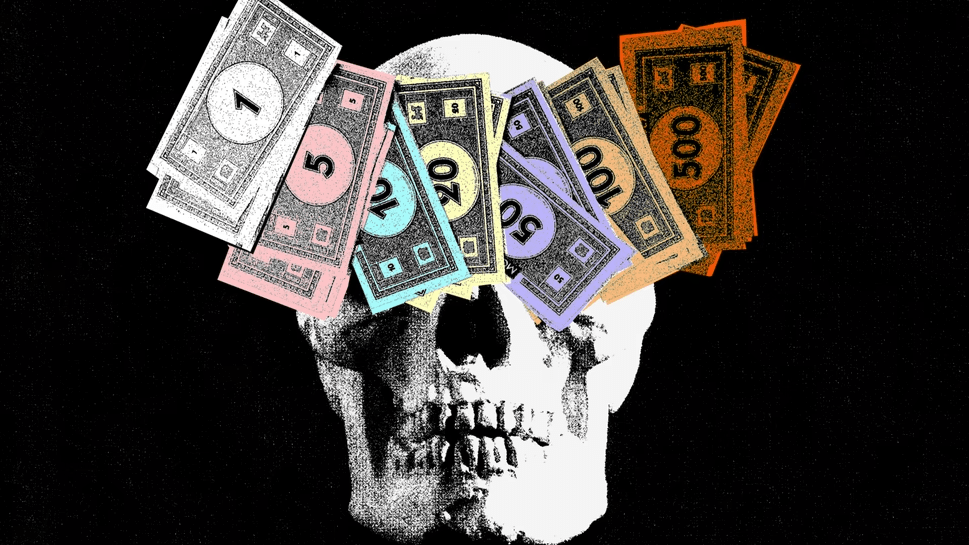
Paul Piff just landed on Park Place. I own it. “Shit,” he says.
I also own three railroads, a couple of high-rent monopolies, and a smattering of random properties. Piff is low on cash. He’s toast.
We’re playing Monopoly on a sunny pre-pandemic afternoon in Piff’s modest office at UC Irvine. The 39-year-old psychology professor is an expert on how differences in wealth and status affect people’s values and behavior. On his desk, accompanying an Iggy Pop figurine and a squeeze toy in the shape of a brain, is a framed print of a Campbell’s soup can with the slogan Empathy… Have some! Piff may be an empathetic guy, but his frustration is showing. He’s ready, he says, for this “absurd” game to be done so he can go home for dinner.
The game is absurd because it’s rigged heavily in my favor. (Read more.)
Is Hollywood Ready for Boots Riley?
The rapper’s subversive satire on race, class, and capitalism is shaping up to be a big summer hit.
July 2018, Mother Jones
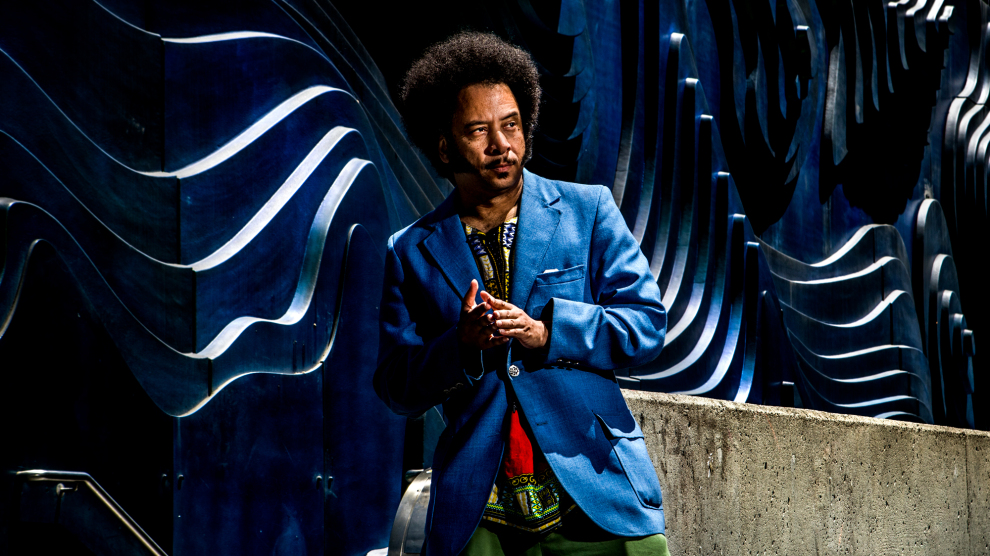
An hour before showtime at a mid-April premiere of Sorry to Bother You at Oakland’s Grand Lake Theatre, moviegoers were already lined up down the block on either side of the marquee. “What’s this for?” asked a passerby. “Star Wars,” someone joked. Inside the historic theater, sporting a ’70s-era navy blue suit, Raymond “Boots” Riley, first-time director and longtime frontman for eclectic hip-hop group the Coup, came out to introduce his film, which hits theaters July 6 and is shaping up to be a success story in the vein of Jordan Peele’s Get Out. ..
Riley, 47, has been a visible icon of East Bay culture and activism for such a long time that it’s hard to imagine he wasn’t born with his trademark Afro and muttonchops. Sorry to Bother You, like Riley’s music, functions as a portal into his revolutionary worldview, wherein artists and working families and people of color struggle against gentrification, greedy landlords, diabolical corporations, and a rigged, racist, rapacious capitalist system protected by thuggish cops and bought politicians. Riley’s coup, so to speak, is that he has managed to package these ideas into a film that’s fast-paced, funny, and refreshingly weird. (Read more.)
The Music I Love Is a Racial Minefield
How I learned to fiddle my way through America’s deeply troubling history.
January 2018, Mother Jones

Last winter, about 10 months before Donald Trump managed to revive Colin Kaepernick’s protest movement and set off a fresh national debate on race, patriotism, and the emotional stability of the president of the United States, Ben Hunter was asked to perform “The Star-Spangled Banner” for a crowd of about 600 people. The occasion was the annual conference of Citizen University, a nonprofit run by former Clinton White House adviser Eric Liu. Presenters at the meeting included progressive authors and activists, broadcasters and businesspeople. Slow-food guru Alice Waters was on the bill, as was Greenpeace top dog Annie Leonard. Hunter was the event’s musician-in-residence. But the anthem request gave him pause. Hunter, 32, is biracial and identifies as black. He took up classical violin at age five and now, as part of a Seattle-based duo with banjo player Joe Seamons, makes his living researching and performing old-time American music. So he already knew a bit about the anthem’s dark past. (Read more.)
This Technology Could Stop the World’s Deadliest Animal
The capabilities of “gene drive” are thrilling—and terrifying.
August 2017, Mother Jones

Not long ago, Bill Gates, whose family foundation has spent billions of dollars battling diseases around the globe, noted in his blog that the deadliest animals on the planet are not sharks or snakes or even humans, but mosquitoes. Technically, the bloodsuckers merely host our most dangerous creatures. Anopheles mosquitoes can incubate the protozoae responsible for malaria—a stubborn plague that inspired the DDT treatment of millions of US homes and the literal draining of American swamps during the 1940s to shrink the insects’ breeding grounds. Malaria is now rare in the United States, but it infected an estimated 212 million people around the world in 2015, killing 429,000—mostly kids under five. Mosquito-borne diseases—Dengue, Yellow Fever, West Nile, Zika—kill hundreds of thousands of people every year and leave others debilitated. What if we could just make all of this go away? (Read more.)
This Man Can Help You Escape the IRS Forever
All you need is a small fortune—and a taste for foreign food.
May 2017, Mother Jones

In January, New Zealanders were surprised to discover that Peter Thiel, the billionaire PayPal co-founder and Donald Trump adviser whose libertarian proclivities and social quirks were lampooned on HBO’s Silicon Valley, had quietly become one of them during a 2011 ceremony in Santa Monica, California.
Thiel, who owns real estate in New Zealand, had secured an exception from the country’s residency requirement by emphasizing his business and philanthropic clout, his investments in two Kiwi companies (totaling $7 million), and his donation of nearly $1 million to a local earthquake relief fund. “We do not sell our citizenship; it is earned,” New Zealand’s Ministry of Internal Affairs claimed after the news broke. Subsequent reports speculated that Thiel, besides being a huge Lord of the Rings fan, viewed the country as a survivalist haven in the event of an apocalypse. “I have found no other country that aligns more with my view of the future” is all Thiel would say.
Thiel’s little secret came as no surprise to David Lesperance, a Canadian-born lawyer who is among the world’s leading champions of transnational exit plans for the superwealthy. (Read more.)
The Man Behind Netflix’s “Black Mirror” Is Maybe a Little Too Good at Predicting the Future
Charlie Brooker turns our high-tech anxieties into smart, terrifying television.
October 2016, Mother Jones

Charlie Brooker is 45 minutes late for our phone interview, and I’m starting to feel like a desperate adolescent. Then again, fans of Black Mirror, Brooker’s smart, Twilight Zone-esque TV series, have waited years for the six new episodes releasing on Netflix on October 21 (with six more to come).
For US viewers, the closest comparison to the 45-year-old Brooker might be our two Jo(h)ns—Stewart and Oliver. Over the years, on Britain’s Channel 4 and in a Guardian newspaper column, Brooker has wittily skewered politicos, celebrities, media personalities, and culture in general—his satirical shows (Newswipe, Screenwipe, Charlie Brooker’s Weekly Wipe, etc.) pair current events with snarky sofa commentary.
But Black Mirror led Brooker down a darker path. Each superbly acted episode takes some aspect of our tech-obsessed culture—voyeurism, social-media rankings, our desire for longevity—to absurd and often harrowing extremes. In the show’s 2011 debut, a princess is kidnapped. Her captor pledges to release her unharmed on one condition: The prime minister must have sexual relations with a pig on live television.
Imagine Brooker’s surprise last year, when a scabrous rumor emerged about an act Prime Minister David Cameron had supposedly performed on a hog’s head in his youth. “Am I living in a simulation?” he recalls thinking. (Read more.)
Is It “Madness” to Rebuild a Flu Virus That Wiped Out 50 Million People?
Because this scientist just created a novel strain that’s dangerously similar.
June 2014, Mother Jones

Remember the Spanish Flu of 1918? Of course you don’t. That’s the freakishly deadly influenza strain that swept the globe in 1918 and 1919, wiping out 30 million to 50 million people. It infected about one in four Americans and killed about 675,000. It didn’t just kill little kids and the elderly, either, like most flu strains. This one was unusually devastating in young, healthy people—although why the “mother of all pandemics” behaved as it did is not fully understood.
This week, Yoshihiro Kawaoka, an influenza researcher at the University of Wisconsin-Madison (which happens to be my hometown), published a new study—”Circulating Avian Influenza Viruses Closely Related to the 1918 Virus Have Pandemic Potential.” It describes the creation of a highly pathogenic flu virus that varies by just 3 percent from the Spanish Flu. “To assess the risk of emergence of a 1918-like virus and to delineate the amino acid changes that are needed for such a virus to become transmissible via respiratory droplets in mammals, we attempted to generate an influenza virus composed of avian influenza viral segments that encoded proteins with high homology to the 1918 viral proteins,” he and his coauthors wrote.
Needless to say, some of Kawaoka’s scientific peers think he’s insane to do such a thing. As Harvard epidemiologist Mark Lipsitch told the Guardian, “I am worried that this signals a growing trend to make transmissible novel viruses willy-nilly, without strong public health rationale. This is a risky activity, even in the safest labs. Scientists should not take such risks without strong evidence that the work could save lives, which this paper does not provide.” (Read more.)
“It Was Kind of Like Slavery”
Backbreaking labor, vicious beatings, unmarked graves, childhoods lost—five men return to the scene of their nightmares.
February 2014, Mother Jones, with Nina Berman

Editor’s Note: Dozier was the school novelist Colson Whitehead used as his model for his best-seller Nickel Boys.
In early August, a few weeks before forensic scientists began exhuming dozens of unmarked graves at the Arthur G. Dozier School for Boys, five older black men took a road trip to Marianna, a rural town on the Florida panhandle—historic Klan country—to confront their demons on the reform school’s vast, wooded campus.
At least 96 children died at Dozier between 1914 and 1973, according to school records, and while state officials say there’s no proof, former students insist that some of the deaths were the result of foul play. Boys of all races were routinely, brutally, and even fatally beaten by staff, they allege; some were raped, and “runners” were fired upon—at least seven kids were reported dead after trying to escape.
Tens of thousands of boys passed through Dozier’s gates between its founding in 1900 and 2011, when Florida officials shut it down (citing budgetary reasons) amid a Justice Department investigation that found ongoing “systemic, egregious, and dangerous practices” at the school. (Read more.)
Voluntary Confinement
Contestants on the Fox Reality show “Solitary” forgo sleep, food, and dignity—all for a crack at $50,000.
March 2008, Mother Jones

Phu Pham was hallucinating badly. Little gray rabbits stared up at him. Vivid cityscapes materialized in the stone-hard carpeting of his 10-foot-diameter pod, and instant-messaging gibberish scrolled across its translucent wall panels. “You’re seeing all this crap,” recalls the diminutive 23-year-old photographer. “It’s scary.” Pham had never been so tired. In two days of isolation, he’d been allowed just a few hours of sleep and minimal food. He’d been treated to the amplified screams of infants and hours stuffed into a small box that kept getting hotter. Those first days, he recalls, were when he most wanted out. But Phu Pham is no quitter.
Endure isolation and a series of arduous physical and psychological “treatments” until you break. That’s the gist of Solitary, a made-for-TV competition that concluded its second season last September and is headed for a third this fall on the Fox Reality Channel, a network spin-off that airs reality shows 24/7. The brainchild of producers Andrew Golder and Lincoln Hiatt, Solitary places nine men and women in cramped pods for up to 12 days with no human contact. “Guests,” their names reduced to numbers, must instead submit to Val—a female spin on Hal, the sentient computer from the sci-fi classic 2001—who serves as host, enabler, and oppressor. (Read more.)

 Michael Mechanic